

mental formations : ค้นหาหนังสือธรรมะ
หน้าหนังสือทั้งหมด
106
The Importance of Meditation for Mental and Physical Health
When your body breaks down it becomes sick. Illness of the body only affects the inflicted individual. However, when the mind is sick, many are affected.
Meditation keeps the mind and body in harmony.
Meditation plays a crucial role in maintaining both mental and physical health. While physical illness primarily affects the individual, mental illness can have broader impacts. Meditation fosters hap
56
Concepts in Buddhist Terminology
สังขาร (sankhara) compounded things; component things; conditioned things; kamma formations; mental formations; mental predispositions; essential conditions; conductive factors; conception; notion; thought; vol…
…us Buddhist terms and concepts including 'สังขาร' (sankhara) which refers to conditioned things and mental formations. It details the concept of 'สังสาร' (samsara) as the cycle of death and rebirth, as well as 'สัจธรร…
227
Understanding Meditation and the Middle Way in Buddhism
… Buddha’s dispensation 101
meditator, less prone to forgetfulness, confusion, absent-mindedness 124
mental formations 16, 21, 72, 134, 143
mental phenomena 42, 129
mental phenomena in mental phenomena, mindfulness of …
เนื้อหานี้สำรวจการทำสมาธิและแนวทางสายกลางที่เป็นส่วนสำคัญในคำสอนของพระพุทธเจ้า โดยอธิบายถึงความสำคัญของการตั้งมั่นเป็นสติในปัจจุบัน และการทำความเข้าใจรูปแบบของความรู้สึกและปรากฏการณ์ในจิตใจ การทำสมาธิ
104
The Balance of Mind and Body
* What is a mind without a body? A ghost.
* What is a body without a mind? A corpse.
* The mind and body must function in good balance and harmony.
- A body with healthy mind = intelligent, alert, m
The text discusses the intricate relationship between mind and body, emphasizing that both must coexist in harmony for optimal functioning. It highlights the necessity of mental care akin to physical
46
Mindfulness Practices in Buddhism
1. mindfulness of the body [kāyunupassanāsatipaṭṭhāna]: Continuously seeing and knowing the body in the body — that is to see and know the subtle inner bodies that lie hidden within our physical body:
This text delves into the four foundations of mindfulness (satipaṭṭhāna) in Buddhism. It teaches practitioners to continuously observe the body, feelings, the mind, and mental phenomena. 'Mindfulness
21
The Inaugural Teaching of the Buddha
…muppāda] consist of: Because of 1. Ignorance [avijjā] there is the condition for the arising of; 2. Mental Formations [saṅkhāra]...because of mental formations there is the condition for the arising of; 3. Consciousne…
The Buddha decided to teach the Dhamma starting with the Group of Five at Isipatana Deer Park. His first sermon, the Dhammacakka pavattana Sutta, serves as a crucial teaching, symbolized by a royal ch
76
Understanding the Aggregates of Clinging in Buddhism
…their physical aggregates (i.e. his or her body). The other four aggregates — feelings, perception, mental formations and consciousness are all of transcendental [lokuttara] purity — and are no longer subject to cling…
…of Buddhist sainthood retain only their physical aggregates as worldly, their feelings, perception, mental formations, and consciousness achieve transcendental qualities. The Buddha emphasized these aggregates as fund…
136
Understanding the Inner Bodies on the Path to Enlightenment
…ates [khandha] i.e. corporeality [rūpa], feeling [vedanā], sense-registration (perception) [saññā], mental formations [saṅkhāra], and consciousness [viññāṇa].
By contrast the Body of Enlightenment is not subject to th…
This text delves into the various inner bodies that exist between the Paṭhama Magga Sphere and the Body of Enlightenment. These include the Subtle Human Body, Angelic Body, and several Brahma Bodies,
247
Glossary of Buddhist Terms
…yet done: see Right Effort)
saṃyojana (see Ten Fetters)
Sanghāta (P. a level of hell)
saṅkhāra (see mental formations)
sankhāra-khanda (see the aggregate of mental formations)
sañcetanā (volition: see sense volition)
…
This glossary serves as a valuable resource for those exploring Buddhism, providing definitions and explanations of important terms. It covers concepts such as Right View, Right Action, and mindfulnes
75
Understanding Suffering and Attachment
…rise five categories: corporeality [rūpakhanda], feelings [vedanākhanda], perception [saññākhanda], mental formations [saṅkhāra-khandha] and consciousness [viññāṇakhanda]. The first aggregate is always physical, the r…
This text delves into the various forms of suffering as described in Buddhist teachings. It highlights how separation from loved ones and possessions leads to emotional pain and how disappointment man
105
The Power of Meditation in Purifying the Mind
When we are young, our mind is simple, innocent and relatively pure. A young mind has not yet been exposed to many mental contaminants. It is easier for the mind of a child to reach a calm and tranqui
When we are young, our minds are simple and innocent, making meditation easier. However, as we grow, life's burdens create stress and unrest. Mental impurities like greed and anger cloud our minds. Me
176
Understanding Right Concentration in Mindfulness
the emperor. Similarly, discretional mindfulness monitors
all mental phenomena — if it is unwholesome, then to try to
reduce it. If it is wholesome, to give it the chance to grow.
8. Right Concentrat
This section discusses the concept of Right Concentration in mindfulness, highlighting its two essential characteristics: supporting role and focusing role. It draws analogies to illustrate how concen
145
Understanding the Eightfold Path: Right Mindfulness and Right Concentration
…g away the whole of the time and that the aggregates of sense-registration (perception) [saññā] and mental formations [sankhāra] are of a nature of not-self because they are not under our control.
As for Right Concent…
This excerpt explores the significance of the Eightfold Path, specifically focusing on Right Mindfulness and Right Concentration. It emphasizes understanding the aggregates of existence as they relate

5
Fortifying Mental Health
When it comes to physical strength, we know that
we must eat nutritious and wholesome foods and
exercise to have a strong, healthy and functional
body. However, most people do not know how to
fortify
This book compiles insightful advice from The Most Venerable Dhammajayo Bhikkhu aimed at helping individuals reinforce their mental resilience. In a world where physical strength is often prioritized,

48
Confronting Obstacles and Building Mental Strength
48
CONFRONTING
OBSTACLES
XVIII
Mental Strength
We were born to perform good
deeds. Please maximize your
time and effort for this purpose.
The flight of life is short, and it is
over too soon. Do not a
This section emphasizes the necessity of mental strength in life. It argues that while material wealth may not be critical, lack of mental resilience can prove to be perilous. Encouraging readers to m
173
Meditation Technique for Inner Peace
Part Six: Meditation Technique and Tips
could imagine a shining sun, of any size that you like, bright
like the midday sun but clean and soothing as the moonlight
on a full moon night. You can choose
This section provides an easy meditation technique to cultivate inner peace. It focuses on visualizing a calming object such as a sun, moon, or candle flame in the center of your body. The method enco
70
Journey to Joy: Embracing Mental Stillness
Journey to Joy
70
70
good description of my mind) needs time to slow
down so that it will not wander from thought to
thought, memory to memory and worry to worry.
I struggled with this mental wanderin
This content discusses the author's struggle with a wandering mind and the journey toward achieving mental stillness through meditation. Initially faced with physical discomforts and distractions, the
85
The Dhammakaya Tradition
The Dhammakaya Tradition
The Dhammakaya Tradition is a Buddhist meditation method taught by Phramongkolthepmuni in the early 20th century. Dhammakaya meditation encompasses both the samatha (tranquili
The Dhammakaya Tradition is a renowned Buddhist meditation technique initiated by Phramongkolthepmuni in the early 20th century, blending samatha and vipassana practices with the aim of overcoming the
133
Understanding the Five Hindrances in Meditation
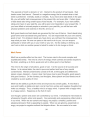
Five Hindrances
Hindrances are negative mental states that impede success in meditation. They consist of:
Sensual Desire – craving for pleasure of the five senses: sight, sound, smell, taste and tou
The Five Hindrances are crucial negative mental states that can obstruct meditation success. They include Sensual Desire, which refers to craving for sensory pleasures that distract the mind. Ill will
94
Understanding Merit and Demerit: The Law of Karma
The opposite of merit is demerit, or ‘sin’. Demerit is the product of bad deeds. Bad deeds cause ‘bad karma’. Demerit is a negative energy that is created when a bad deed is performed: mentally, bodil
The opposite of merit is demerit, representing the consequences of bad deeds which cause negative karma. Both good and bad deeds are governed by the Law of Karma, where actions determine outcomes in t